
Eight projects will receive support through the Post-Exchange Initiative grant scheme
14. January 2026
71 applicants competed for support through the Post-Exchange grant scheme. Eight projects have been selected in this year’s application round.
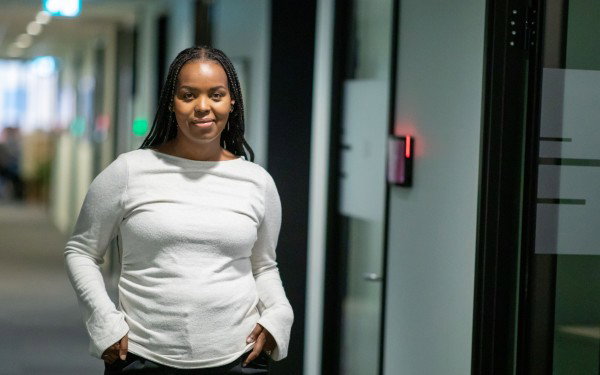
“The budget this year is twice as large as last year. We are very pleased that we can support eight projects that have clear goals and high quality,” says programme adviser Dilanka Fernando at Norec.
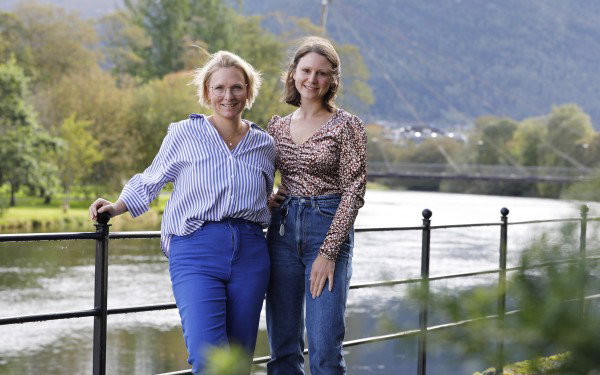
She has assessed the applications together with network adviser Tasle Torrissen Knapstad.
The Post-Exchange Initiative is a grant scheme for small projects. Only people who have completed a Norec work-exchange can apply. The goal is to give former exchange participants the opportunity to bring to life ideas they developed during, or after, their exchange.
“In this round we especially wanted projects that deal with digitalisation and gender equality, but that was not an absolute requirement. The most important thing is that the idea is good, and that the plan for implementation is realistic,” says Fernando.
The applications were of high quality
The grant scheme was launched in August 2024. In the previous application round, Norec received 145 applications.
“We had hoped for even more applicants this year, since the funding pot had doubled. At the same time, the 71 applications we received were of very high quality. It was challenging to select the eight projects that will receive support,” says Knapstad.
All eight projects have a clear plan and a close link to Norec. They all have women and girls as their main target group, and address topics related to digitalisation or gender equality.
“The selected projects have good cost control, and as much as possible of the funding goes to activities in the local communities. They have also set realistic goals and carried out solid risk assessments,” says Knapstad.
The aim of the eight projects is to contribute to real change where they are carried out.
The eight projects that will receive support are:
1. Better health, job opportunities, and rights for women and girls
Women and girls on tea plantations and in slum areas in Bangladesh have limited access to education, health services and knowledge about reproductive health. Many are also exposed to harmful practices related to menstruation.
The project will strengthen knowledge about sexual and reproductive health and give girls and women greater opportunity to take part in society.
Over six months, 300 women and girls will receive:
- workshops and campaigns on health and rights
- training in life skills and income-generating activities
- hygiene kits and reusable menstrual products
- meeting places where they can share experiences
Name: Dignity First: Menstrual health and empowerment
Country: Bangladesh
Amount: USD 4,650
Goal: Better health and stronger participation in society for women and girls
2. Giving young people knowledge about recycling and access to work
Many young people in Madagascar lack access to vocational training that equips them with practical skills for self-employment. At the same time, plastic waste and deforestation are major environmental problems.
The project will give 60 young people training in:
- plastic waste recycling
- eco-interior design and creative product recycling
- production of ecological charcoal made from agricultural waste
The goal is to give young people the opportunity to start small businesses, reduce unemployment and poverty in the community, and create green enterprises.
Name: Green prosperity skills
Country: Madagascar
Amount: USD 1,750
Goal: Give young people the knowledge to start their own businesses, reduce waste and unemployment, and build a greener local economy.
3. Giving women the chance to move out of extreme poverty
Market Circles works with women who live in extreme poverty in the slum areas of Nsambya, Nakawa, and Kamwokya in Uganda. The project provides support and skills training to help the women to obtain a stable income.
The project offers:
- production equipment
- training and mentoring
- access to saving schemes, loans, and social protection
Name: Market Circles: Economic empowerment
Country: Uganda
Amount: USD 5,150
Goal: Give women a stable income and greater economic security.
4. Income for single mothers through organic agriculture
Many single mothers and young people in Domboshava are engaged in organic agriculture, but they struggle to turn organic farming into sustainable livelihoods.
The project will give 20 participants training as agroecological entrepreneurs and certified trainers of trainers. This will enable them to spread knowledge in their communities. At least 70 per cent of the participants will be women.
They will receive training in:
- sustainable cultivation and product development
- packaging and labelling with climate-friendly materials
- digital marketing and cooperation on sales
Name: Sustainable agriculture and enterprise
Country: Zimbabwe
Amount: USD 5,150
Goal: Provide income and strengthen local climate adaptation.
5. Preventing violence and improving daily life for women
Violence, exploitation of women, and poor sanitation create serious problems in four villages in Madhya Pradesh.
Many women do not speak out when they are exposed to violence. This may be because they live in an environment where violence is normalised, because they do not know their rights, or because there is no support system.
The lack of toilets in schools also means that girls often stay at home when they have their period.
The project will:
- build two safe toilets for girls at local schools
- establish two safe centres for counselling, learning, and support
- run campaigns on rights, laws, and reporting systems for more than one thousand two hundred participants
- provide counselling to at least twenty survivors of violence
- train 44 community leaders and change agents
Name: Project BRAVE
Country: India
Amount: USD 4,850
Goal: Create safety, improve health, and increase school attendance for girls.
6. Using organic waste for food production
In Mbarara there are major challenges with poor waste management, food insecurity, and limited income opportunities.
After a work-exchange through Norec, the applicant started practicing small urban farming to reduce waste and improve food production using small space. Through the post-exchange grant the project will be further developed.
The project will provide training in:
- sorting, composting, and rearing of black soldier flies
- cultivation in sacks and in water (hydroponic cultivation)
- sustainable consumption and climate adaptation
Name: Sustainable smart-farming and waste solutions
Country: Uganda
Amount: USD 5,035
Goal: Reduce waste, improve food security, and create income.
7. A space for learning, production, and market access for young people
Youth in Kibera lack work, financial knowledge, and opportunities for green jobs. At the same time, waste piles up in the area.
The project will establish an innovation laboratory where young people can develop environmentally friendly solutions.
They will receive training in:
- glass recycling
- production of environmentally friendly briquettes
- creative art projects
- savings and personal finance
Name: Jitegemee Youth Innovation Lab
Country: Kenya
Amount: USD 5,150
Goal: Give young people skills, work, and new green opportunities.
8. Giving women better legal protection
Women in Epworth, Zimbabwe, have weak property rights and little legal knowledge. Many live with a high risk of being exposed to violence.
The project will strengthen women’s legal position through:
- communal legal education campaigns and mobile legal aid workshops for 400 women
- training of 30 paralegals and 10 legal aid volunteers who can help in conflicts and cases of violence
- support for at least 100 legal cases
Name: Epworth Equality Initiative: Property rights and gender-based violence
Country: Zimbabwe
Amount: USD 5,050
Goal: Strengthen legal protection and give women greater independence.
All amounts include an administrative fee of USD 150.