
With support from Norec, Sithembile and Leonard became neurosurgeons
21. December 2025
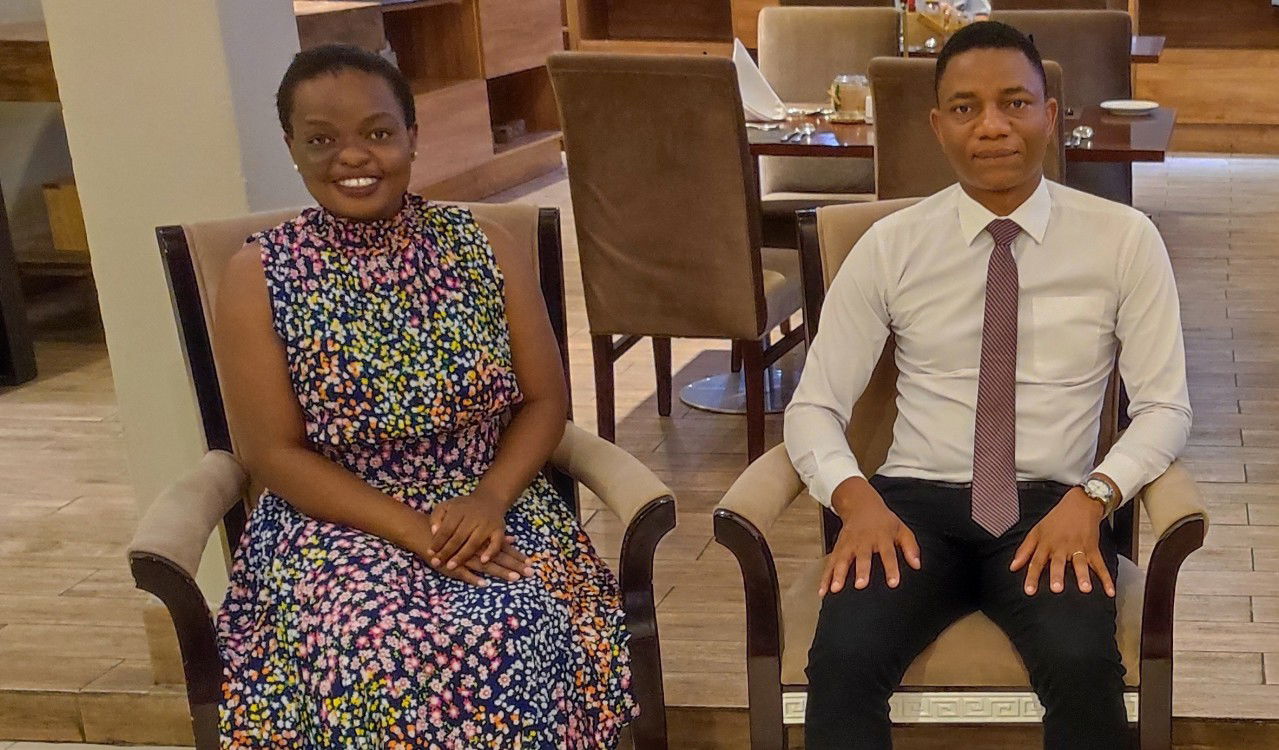
Malawi has 23 million inhabitants and only six neurosurgeons. Two of them are Sithembile Chimaliro (33) and Leonard Chafewa (34).
They were trained through a collaboration between Oslo University Hospital in Norway and Queen Elizabeth Central Hospital in Malawi, supported by the Norwegian Agency for Exchange Cooperation (Norec). This collaboration has transformed access to life-saving healthcare in Malawi.
“I have always dreamt of becoming a surgeon and being able to heal patients with my hands. But I never thought it would be possible to train as a neurosurgeon in Malawi,” says Chimaliro.
When she and Chafewa finished their medical degrees, there was no neurosurgery training available in Malawi. Anyone wishing to specialise had to go abroad.
“At the time, I had just gotten married, and I did not want to leave the country for a long time for further education,” says Chafewa.
Inspired by Malawi’s only neurosurgeon
After completing his internship, Chafewa worked at a district hospital. There, he saw many patients die from head injuries that they were not able to treat.
“I saw many lives that could have been saved. But we had neither the equipment nor the expertise to help. In medical school there was little emphasis on neurosurgery, unlike now,” he explains.
Then he met neurosurgeon Patrick Kamalo at Queen Elizabeth Central Hospital in Blantyre. At that time, Kamalo was the only neurosurgeon in the entire country.
“Patrick showed me what neurosurgery was about and introduced me to the training,” says Chafewa.
Working towards a training programme
With funding from Norad, Kamalo had trained as a neurosurgeon in South Africa. As the sole neurosurgeon for 20 million people in Malawi, he saw an urgent need to establish a dedicated neurosurgical unit at Queen Elizabeth Central Hospital.¨
He therefore reached out to Oslo University Hospital to explore collaboration. This led, among other things, to the construction of a dedicated neurosurgery operating theatre at QECH. With Norec funding, an exchange of healthcare personnel began, including nurses, anaesthetists, and surgeons, between Norway and Malawi.
After a few years, efforts began to develop QECH into a training institution in Malawi. The aim was to establish a national neurosurgery education programme, enabling doctors to specialise without leaving their country or families. This was established in 2017.
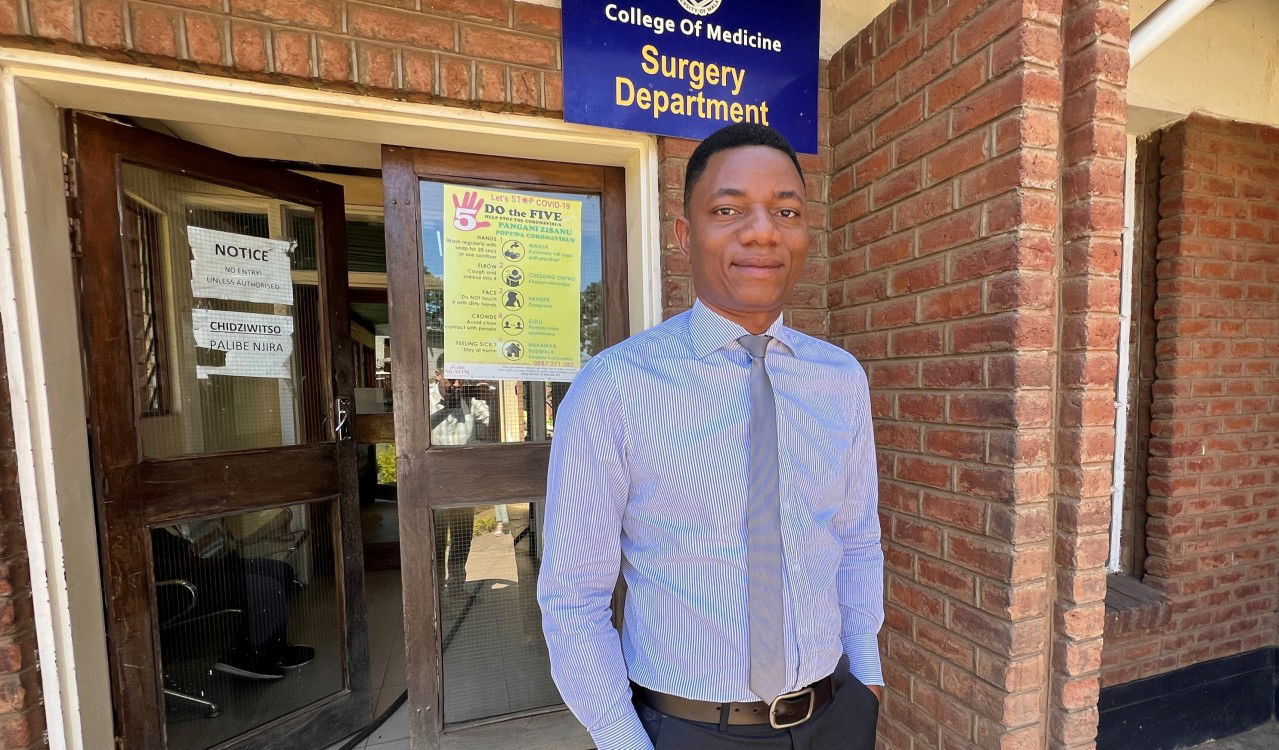
The first two candidates
In 2018, Chafewa and Chimaliro became the first two candidates in Malawi’s new neurosurgery training programme.
“For me, it meant everything. I could stay at home, work in a familiar environment, and still receive guidance from experienced specialists in Norway. That made the training possible,” says Chafewa.
Norwegian neurosurgeons travelled regularly to Malawi to teach. When the pandemic struck in 2020, they had to return to Norway, but the training continued online via Zoom — a digital solution that proved so successful it continues today, alongside in-person teaching.
“We’ve had weekly digital lectures ever since, even after finishing our training. Specialists from Norway present topics, and we discuss patient cases together. Now colleagues from Ethiopia and Uganda also take part. Thus even more people benefit from the project,” says Chafewa.
Chimaliro adds that continued contact with the professional community in Norway is invaluable.
“We can always reach out for advice when we face a challenge or have a question. Without the Norec project, we would not have that connection,” she says.
Continuing the work in northern Malawi
Since completing her training, Chimaliro has moved from Queen Elizabeth Central Hospital to Mzuzu Central Hospital, about ten hours north of Blantyre. She is now the only neurosurgeon there, in much the same position as Patrick Kamalo was more than a decade ago.
“This means that seriously ill patients here in Mzuzu can get the help they need. But we need more neurosurgeons here too. My hope is that I’ll have a neurosurgeon colleague within the next few years,” she says.
Her second wish is for a dedicated neurosurgery operating theatre at the hospital, so that neurosurgeons do not have to share facilities with other surgical departments. And ideally with a complete team of specialised nurses and anaesthetists.
“Maybe we could start an exchange programme here in Mzuzu as well?” she adds with a smile.
“They taught us how to fish”
Through the Norec project, nurses, anaesthetists, medical technicians and theatre staff have received training through work exchanges between Norway and Malawi. This has led to improved routines, better equipment and higher quality patient care.
“It has been an interdisciplinary collaboration that has strengthened the entire hospital,” says Chafewa.
He believes Norec’s support has been crucial to the project’s success.
“Norec didn’t just give us a fish — they taught us how to fish. The system they helped build now stands on its own. The training continues, and more people are joining the programme. Even if Norec’s support ends, the project can continue. It’s sustainable,” says Chafewa.