
A thank you and farewell from the director of Norec
4. March 2026
What has eight years at Norec meant — for the organisation, its partners and the thousands of young people who have taken part in work exchanges?
As he prepares to step down as Director and take up a new role at Volda University College, Jan Olav Baarøy shares his reflections on Norec’s development, its impact on sustainable development, and the people who made the journey possible.
Friday, 28 February, will be my last day as Director of Norec. After eight years, I will take up the position of Director at Volda University College on 1 March.
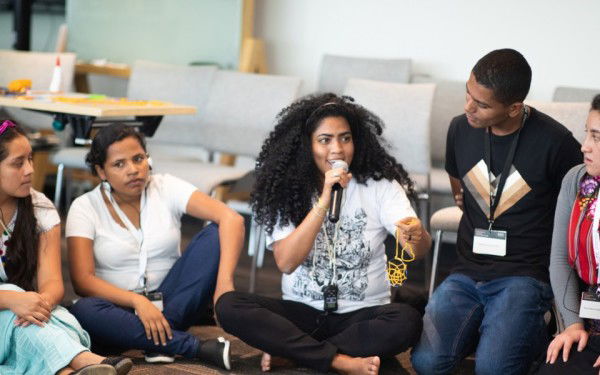
Thank you to all of you who have made it possible for Norec to facilitate work exchanges for more than 13,000 young people in another country over the past 25 years. They have met new colleagues and returned home with new insights, which they in turn have shared with co-workers and partners.
A conservative estimate suggests that each participant has influenced ten others through what they have learnt. This points to around 130,000 people who have gained knowledge about sustainable development through Norec.
If we also include the approximately 1,500 companies, institutions and organisations — along with their customers and users — that have sent and hosted young exchange participants, we see a wide diversity of professions and countries sharing their expertise to make the world a better place tomorrow than it was yesterday, through Norec.
Despite everything happening in the world today, this model for work-exchange is working very well, and the results are clear. Both participants and sending and host organisations report increased competence in collaboration, mentoring and coaching, as well as in working in agile and flexible ways for sustainable solutions. These are capabilities we need in the times we are facing.
In the years ahead, Norec will develop methods to gather strategic foresight from our partners in many countries. They represent a broad cross-section of society and will give us insight into how others view the future and what prospects look like where they live. This will provide valuable input for the further development of our work in evaluation, work-exchange and recruitment to multilateral organisations.
As the world’s largest multilateral organisation, the United Nations faces formidable challenges — both in delivering on the mandates given by its 193 member states and in managing the financial costs involved. In 1954, the UN’s second Secretary-General, Dag Hammarskjöld, said that the UN was not created to take humanity to heaven, but to save it from hell. It is a modest comfort, but one we should safeguard today in light of the future outlook we see. Norec is proud to recruit Norwegians to the UN.
February 2026 marks exactly eight years since Norec began relocating from Oslo to Førde, when we transitioned from Fredskorpset (FK Norway) to the Norwegian Centre for Exchange Cooperation (Norec). We have grown from 42 employees to 60 today, and from one core mandate (work-exchange) to three: recruitment to multilateral organisations, work-exchange, and an independent department for evaluation of Norwegian development assistance.
This growth in responsibilities and staff is the result of strong cooperation with the Ministry of Foreign Affairs, which has invested in Norec in Førde. It is also the result of a region that attracts highly skilled employees — and of colleagues who support and advise one another in carrying out Norec’s public mission.
I would like to thank everyone who has been part of this journey over the past eight years.
Thank you for everything,
Jan Olav